Our ‘made-over’ Little Chapel
The Little Chapel is a space where families can say goodbye, share & create memories, & grieve a pregnancy or baby loss.
Thanks to the kindness of DFS & interior designer Alannah Monks, our Little Chapel has been given a makeover & made even more peaceful & serene.
We welcomed Michael & Karen, who lost their baby Alice last year, back in to see the revamped Chapel. Michael works with DFS, so this makeover was an especially personal & poignant one for everyone involved.
Michael said; “We were devastated by the loss of baby Alice last year. It was an extraordinarily difficult time for me and Karen, but we got incredible support and help from the Bereavement Team at the Rotunda. This team helped us create our memories of Alice, from every outfit the team placed her in, to the foot and hand prints we have at home and her resting place in the angel’s plots in Glasnevin. This room is where we all got to say goodbye, the Grandparents, Uncles and Aunties all included. Words can’t describe what the Bereavement Team did for us and we will be always truly grateful for that. We were so pleased that DFS got on board to do this makeover and they have gone above and beyond what we expected. This is our second time in the Rotunda this week as we were in for a scan, as thankfully, we are expecting again. We look forward to a new sibling for Ruby and our much loved and missed Alice.”
Our Bereavement Team are so appreciative of this act of kindness. They said; “We work with families whose lives have been changed in an instant. They are grieving, many are in shock seeing their dreams shattered. Having a dedicated space especially for them and their families is a small step in helping to ease their trauma.”
We are very thankful that, during this pandemic, our Little Chapel is situated outside the main hospital building, so we have been able to accommodate socially distant ceremonies that include all the support that bereaved parents need. Hopefully this refurbishment of this important space will also provide more comfort to parents & families at such a difficult time.

The Little Chapel before
The Rotunda Hospital, Ireland’s busiest and leading maternity hospital, has welcomed the results of the National Maternity Experience Survey (NMES), which were launched today. The survey is a joint initiative by HIQA, the HSE and Department of Health, offers women the opportunity to share their experiences of Ireland’s maternity services. The aim of the survey is to learn from the experiences of women to improve the safety and quality of the care that they and their baby receive.
708 women who gave birth in the Rotunda in October 2019 were invited to participate; and 355 women completed the survey (47% response rate). 36% were aged 30 – 34 years and 34% were aged 35 – 39 years, while 51% had no previous births.
There were 68 questions which captured the whole maternity pathway from antenatal care, through labour and birth, to postnatal care in the community. The report includes women’s experiences of the care provided both in the Rotunda Hospital, and by general practitioners and public health nurses in the community.
Overall, 86% of participants rated their overall experience in the Rotunda Hospital as ‘good’ or ‘very good’. The hospital scored higher than the national standard in the following areas:
- Skin-to-skin contact with their baby shortly after the birth – 9.6 out of 10
- ‘Care while pregnant (antenatal care)’ – 7.5 out of 10
- Care in hospital after the birth’ – 7.6 out of 10
The Master of the Rotunda Professor Fergal Malone welcomed the survey findings. He said:
“It is gratifying to note that the vast majority of patients who have utilised the Rotunda Hospital for care rate the hospital very highly, and that these ratings exceed the national averages. The Rotunda is the Maternity Hospital of Choice, and as such is committed to listening to our patients views and experiences, as well as being responsive to all positive and negative feedback received. We intend to further improve our services in light of the results of the National Maternity Experience Survey, in particular by focussing on better communication with patients, improving access to information, driving improvements in our physical infrastructure, and maximising our staffing with midwives, breastfeeding support and mental health support. We have outlined a range of specific interventions and new programme development to further improve the service experience at the Rotunda.”
The hospital has identified a number of quality improvement initiatives from the results, which are being progressed since the survey was undertaken.
Information on the Rotunda’s report and the quality initiatives to address the opportunities for improvement identified are available on yourexperience.ie
Welcome to our eighth edition of the Rotunda GP Connect E-zine- Our regular communication tool to update our referral General Practitioners on the latest developments at the Rotunda, including providing educational updates on our clinical services.
Firstly, I would like to wish a happy and healthy New Year to all of our referral doctors as we look forward to an exciting 2020 filled with new innovations with our clinical services. The Rotunda remains the busiest maternity hospital in Ireland, delivering 8,411 babies and caring for over 9,500 mothers in 2019. Despite falling birth rates throughout Ireland, the Rotunda has solidified its position as the busiest maternity hospital in Dublin and Ireland, due to natural population growth in its catchment area and the increasing popularity of the Rotunda in public perception. Indeed, the second series of the acclaimed television documentary, The Rotunda, has further enhanced the reputation of the hospital amongst the general public, resulting in increased demands for our services.
At the end of 2019 we completed the first full year since we were the first to roll out pregnancy termination services following the repeal of the Eighth Amendment in 2018. This has been an excellent example of mutual collaboration and support between primary care and hospital-based health services, with the Rotunda’s Pregnancy Options Service working closely to support our referral GPs.
We have also recruited additional consultant obstetrician-gynaecologists and other allied health professionals to further expand our clinical service offerings. One of our major goals for 2020 will be to increase the capacity for routine gynaecology referrals, both at traditional gynaecology clinics and at “one stop/ see and treat” outpatient hysteroscopy clinics.
We plan a further GP Educational Study Evening on March 25, 2020, and I hope to welcome as many of you as possible to what will be another effective meeting to enhance knowledge of our services and troubleshooting how best to get the most out of our clinical partnership.
As always, I remain constantly available for direct communication with you if at any time you are having challenges accessing our services or indeed if you have any ideas on how best to improve our service offering to our GP community
Yours sincerely,
Professor Fergal Malone,
Master, The Rotunda Hospital
Subscribe to get the next issue directly to your inbox
In this issue:
Our next GP Study Evening on the 25th of March
________________________________________
Meet our expanded team of Consultants in our Private and Semi-Private services.
________________________________________
Ms Deirdre Daly, Assistant Professor in the School of Nursing and Midwifery TCD, introduces the new, free, online educational course, Women’s Health After Motherhood (WHAM).
________________________________________
Fergal O’Shaughnessy provides an update on Ondansetron as a potential treatment option for women with Hyperemisis Gravidarum
________________________________________
Dr Vicky O’Dwyer, Consultant Obstetrician and Gynaecologist, overviews the Rotunda Hospital Colposcopy Service
________________________________________
And
________________________________________
Patricia Butler, Bereavement Support Midwife, outlines our Bereavement Service in the Rotunda Hospital
________________________________________
Save the Dates!
25th March – GP Study Evening
22nd April – Practice and Public Health Nurse Study Evening
5th May – Safe in our Hands Conference – Celebrating World Hand Hygiene Day and International Day of the Midwife
The Rotunda Hospital is delighted to support the National Maternity Experience Survey.
The Survey offers eligible new mothers the opportunity to share their experiences of Ireland’s maternity services — from antenatal to postnatal care — in order to improve the safety and quality of care provided to women and their babies.
All women aged 16 years or older who gave birth in the Rotunda in October 2019 will be asked to participate in the survey. You will receive the survey by post in early February 2020.
This Feb, women who gave birth last October will receive an invite to take part in Ireland’s first ever National Maternity Experience Survey, asking women about the maternity care they received. If you receive an invite, @careexperience want to hear from you! #maternityexperience pic.twitter.com/tXACvYesHI
— The Rotunda Hospital (@RotundaHospital) February 5, 2020
Timeline
Frequently Asked Questions
What is the National Maternity Experience Survey?
The National Maternity Experience Survey is a new nationwide survey asking women who have recently given birth about the maternity care they received. The purpose of the survey is to learn from the experiences of women to improve the safety and quality of Ireland’s maternity services.
Who will be invited to participate in the survey?
Women aged 16 or over who give birth in October 2019 and have a postal address in the Republic of Ireland will be invited to participate in the National Maternity Experience Survey.
How do I participate in the survey?
All eligible new mothers will be contacted by post in February or March 2020. They will receive information on the survey and a link to the online survey.
What does taking part involve?
Taking part in the National Patient Experience Survey is very easy. Eligible patients will receive the survey by post a few weeks after their discharge, and the completed survey can be returned in the included Freepost envelope. The survey can also be completed online using a unique code provided on the postal survey.
Why should I complete the survey?
Your responses will provide us with important information on the standard of maternity care in Ireland. This will help us to identify where our maternity services are performing well and what needs to change to improve the quality and safety of care provided to both women and babies
What will you do with my answers?
All survey responses will be combined to produce reports on patients’ experiences of hospital care in Ireland. National results and local results are made publicly available on this website. The results of previous surveys can also be found under Historic Results.
I had a good experience in hospital — do I still need to take part?
Yes, please do! We want to hear about all experiences of maternity care — good and bad — so that we can get an accurate picture of the standard of maternity services in Ireland.
What type of questions will I be asked?
The survey asks about your experience of care during your pregnancy, during labour and birth, and care after your baby has been born.
Will my answers be treated confidentially?
Yes. Your answers will be processed in strict confidence and held separately from your contact details. Your hospital or home birth service will see anonymous responses only. Your answers will be solely used for analysis; they will not be given to commercial entities or used for commercial purposes.
What happens if I do not want to participate?
Participation in the survey is voluntary. While we would love to hear about your experience, it is possible to opt-out of the survey on the website or by calling our Freephone number 1800 314093 or by emailing us at [email protected]
Where can I find out more?
More information can be found on Patient Experience Survey website
Freephone 1800 314093 (Monday – Friday, 9am – 5pm)
Email [email protected]
Postal Address
The National Patient Experience Survey
c/o HIQA,
George’s Court, George’s Lane,
Dublin 7, D07 E98Y
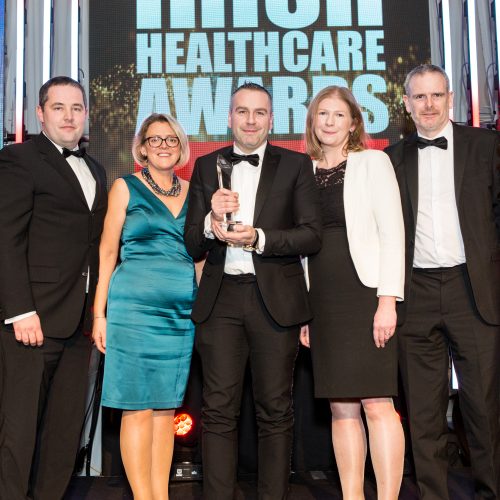
The Rotunda Hospital along with our academic partners in the Royal College of Surgeons in Ireland, enjoyed plenty of success at the Irish Healthcare Awards, held at the Ballsbridge Hotel on Wednesday 20th November.
Our staff were nominated in four categories in the prestigious awards this year, and brought home one award and one commendation.
CREATE: The Art of Pregnancy, Birth and Beyond, an art exhibition exploring perinatal research and experiences, organized by the HRB Mother and Baby Clinical Trial Network based in the RCSI Rotunda Research Department, was nominated in the Patient Education Project of the Year category.
The Rotunda’s Clinical Innovation Unit was nominated for Hospital Project of the Year for their project ‘Reducing invasive Group B Streptococcus Disease in Mothers and Their Babies Using Rapid Molecular Testing on a 24-7 Basis and Theoretical Modelling’.
The HRB Mother and Baby CTN based in the RCSI Rotunda Research Department was nominated, and commended, in a second category, Patient Lifestyle Educational Project of the Year, for their Debunking The Myths: The Science Behind Women’s Health workshop series for Transition year students.
And, the Clinical Innovation Unit was also nominated, and won, in a second category, Best Use of IT, for their project ‘Use of Artificial Intelligence for Interpretation of Bacterial Vaginosis Molecular Results in Maternity Patients’
Congratulations to all involved!

Winners of Best Use of IT at the Irish Healthcare Awards 2019, from The Rotunda Clinical Innovation Unit, Dr Richard Drew, Marian Brennan, Tom Murphy, Dave LeBlanc, Joanne O’Gorman, with Editor of the Irish Medical Times, Lloyd Mudiwa, and broadcaster Ciara Kelly.
–In 2018 93% of all babies born in the Rotunda Hospital at a birth weight of greater than 700 grams (1.54lbs) survived-
– The corrected perinatal mortality rate (PMR) is at an all-time low at 3 per 1,000 babies born, marking a 40% reduction from 2015, according to Rotunda Hospital figures-
– The Rotunda Hospital launches the first NICU ‘End of Treatment Bell’ in Ireland-
To celebrate premature infants born at the Rotunda Hospital, Ireland’s busiest maternity hospital, the Rotunda Foundation welcomed back about 70 families to host a party in their honour.
All babies born in 2017 who weighed less than 1500 grams along with their parents and siblings came together on the 14th of November to celebrate World Prematurity Day, and to also welcome back the first group of babies to complete the “Beads of Courage” programme.
The event also marked the launch of the new ‘End of Treatment Bell’ which acknowledges babies on completion of treatment and is rung in celebration of their departure from the hospital. The neonatal intensive care unit (NICU) at the Rotunda Hospital is the first in Ireland to receive a treatment bell. The Rotunda Hospital obtained the ‘End of Treatment Bell’ through charitable donations made through the Rotunda Foundation.
This year also marked another successful year of “Tentacles for Tinies”, a pilot project launched by the Rotunda Hospital in 2017.
The Rotunda Hospital also reported that the corrected PMR is at an all-time low at 3 per 1,000. This marks a 40% reduction from 4.8 per 1,000 babies that were born in 2015. New statistics from the report also indicate that 93% of all babies born in the Rotunda at a birth weight greater than 700 grams (1.54lbs) survived. This information is contained in the Rotund Hospital’s 2018 Annual Report, which was launched today.
Commenting on these positive results, Master of the Rotunda Hospital, Professor Fergal Malone said: “I am delighted to announce the results of our 2018 Annual Report on World Prematurity Day. A notable development for the Rotunda Hospital is the significant reduction in the corrected perinatal mortality rate, which has reduced by 40% since 2015. This is a very positive and reassuring figure. The multidisciplinary approach to antenatal care, advances in maternal-fetal medicine and neonatal pathways have contributed to this significant improvement.” World Prematurity Day is one of the most important days in the year to raise awareness of the challenges that families face as a result of preterm birth. Another significant finding in our annual report this year relates to the survival rate of premature babies born weighing more than 700 grams/ 1.54lbs, in that 93% of these babies at the Rotunda Hospital survived in 2018. While this survival is likely attributed to improvements in more than one specific area, the principle of the ‘golden hour’ post-delivery and the importance of timely interventions are recognised at the Rotunda Hospital. The quality of neonatal management in the first hour of life has important effects on not only the immediate health of the baby but also on its long term outcome.”
As the number of deliveries increases at the Rotunda Hospital, the report also showed that 99% of babies admitted to the neonatal unit survived to return home with their families. Admissions to the neonatal unit for the year were 1,116. With 8,514 overall babies delivered in 2018, the Rotunda Hospital welcomed these findings as it is now officially named the busiest maternity hospital in Ireland, for its first year.
Professor Malone concluded: “As well as marking World Prematurity Day, we are pleased to share our 2018 annual report findings today which reveals an overall stellar year for the Rotunda Hospital. In addition to positioning ourselves as the busiest maternity hospital in the country, we have also significantly improved our patient outcomes. Our financial performance was also superb effectively yielding a break-even budget, something which is highly unusual in the public health service.”
-New device for collecting umbilical cord blood is safer, faster, more efficient, and more versatile-
Key Plastics, an engineering company based in Bray, Co. Wicklow and the Rotunda Hospital, Dublin, the oldest maternity hospital in the world, will today launch their new invention that provides safe, fast, efficient, versatile and enhanced performance benefitting maternity units across the world at the Med In Ireland Conference, the RDS, Dublin.
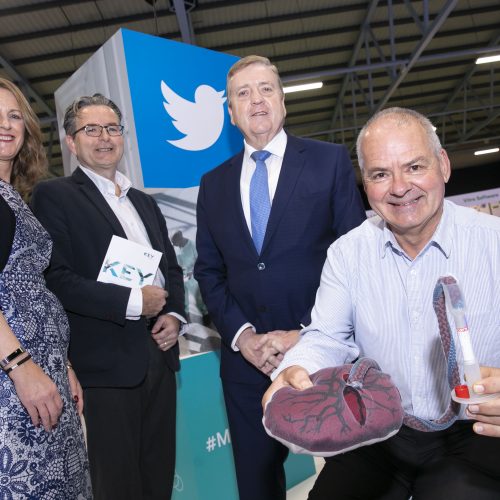
The Umbifunnel is a unique, functional-designed, cord blood collection device featuring a collection funnel and stand.
Collecting blood from an umbilical cord, post-delivery, is common practice in obstetric and neonatal care. The blood collected is used for screening and diagnostic tests including blood typing, genetic screening, haemoglobinopathy screening and coagulopathy screening, among other functions.
Until now, the two most commonly used methods for collecting this blood have been, to use a needle and syringe or a draining method. These methods pose risks of needle stick injuries to staff and the risk of not obtaining the best sample possible.

(L-R) Deirdre Glenn, Director of Life Sciences, Enterprise Ireland, Eamonn Downes, Managing Director, Key Plastics, Minister Pat Breen TD, Les Corbett, Health and Saefty Manager, Rotunda Hospital, with the Umbifunnel, a cord blood collection device developed by the Rotunda Hospital and Key Plastics, launched at the Med In Ireland Conference in the RDS this morning
Les Corbett, Health and Safety Manager at the Rotunda Hospital, and inventor of the Umbifunnel said: “The Umbifunnel is a simple solution. It’s intuitive, no training required and makes an important step in the blood collection process easy. It also eliminates the risk of needle stick injuries during the collection of umbilical cord blood. So, not only is The Umbifunnel fast, efficient, and versatile, it’s also safe.”
Speaking about the device, Prof Fergal Malone, Master of the Rotunda Hospital, said: “At the Rotunda Hospital we are always looking for new ways to improve the experience for patients and staff. The Umbifunnel invention has been progressed through the dual support of our partners Key Plastics and is a direct response to Principle Number 2 of the Rotunda Hospital’s Strategic Plan 2017-2021 objectives. This is the latest example of the Rotunda Hospital providing the platform for innovation and paving the way forward for best national and international healthcare practices.”
The Umbifunnel removes the need for needles and syringes, eliminating the risk of needle stick injuries for many tests that occur daily in maternity units worldwide. This will reduce the risk of clotting, ensuring that these precious blood samples’ integrity is kept intact.
The elegant simplicity of the design of the Umbifunnel means that it is easy to use with minimal training required. Its versatility allows umbilical cord blood to be funnelled into all standard laboratory collection tubes and it allows hands to be free for cord milking.
Speaking of the partnership with Key Plastics, Dr Joanna Griffin, Director of Research and Clinical Innovation at The Rotunda Hospital commented: “We have worked with Key Plastics for the last number of years as we took the Rotunda Umbifunnel from concept to manufacture. We are delighted to continue to work closely together as we bring this exciting medical device to market.”
For further information on the Umbifunnel please contact KeyPlastics directly at [email protected]

Midwife Emily Campion from The Rotunda Hospital with the Umbifunnel, developed by The Rotunda Hospital and Key Plastics, which was launched at the Med In Ireland Conference in the RDS today
About Key Plastics
Key Plastics was founded in 1986 and is a single destination solution provider offering custom manufactured solutions in metal and plastics to industries such as aerospace, medical, telecoms and engineering. Accredited to ISO 13485, AS 9100 & ISO 9001 Key Plastics have combined mould design, mould manufacture and precision engineering services with state of the art injection moulding capabilities to support their worldwide customer base.
By providing full project support from concept to prototyping and validation to mass production their customers receive not only a streamlined procurement process but are guaranteed a competitively priced solution, on-time deliveries at superior quality levels.
Today, as part of National Breastfeeding Week, The Rotunda Hospital launched our new ‘Antenatal Expression of Colostrum’ Patient Information Leaflet.
In the Rotunda Hospital we believe that breastfeeding is a unique interaction between mother and baby which feeds and comforts and also helps prevent against infection and disease. If it is anticipated that a baby may experience difficulties with feeding or maintaining their blood sugar levels after birth, expressing colostrum antenatally (before birth) means that the baby will have a supply of breast milk available if required, therefore reducing the need to use infant formula.
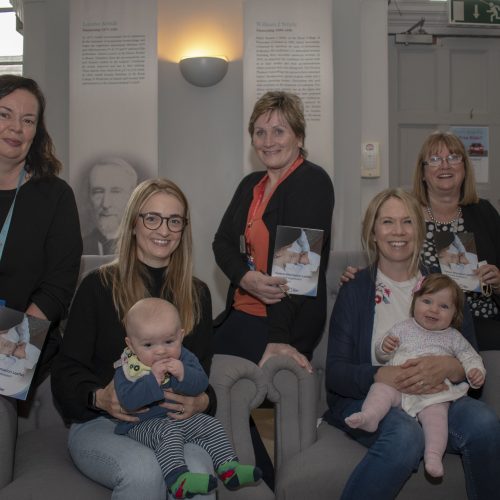
- The team from the Postnatal Ward at the launch of our Antenatal Expression of Colostrum Leaflet
- Members of The Rotunda Hospital Lactation and Midwifery teams at the launch of our Antenatal Expression of Colostrum Patient Information Leaflet
We hope the launch of this new leaflet will raise awareness of the practice of expressing colostrum antenatally, and give expectant mums the information they need to make informed decisions around their newborns nutrition.
Click the image below to download the leaflet, or find it here.
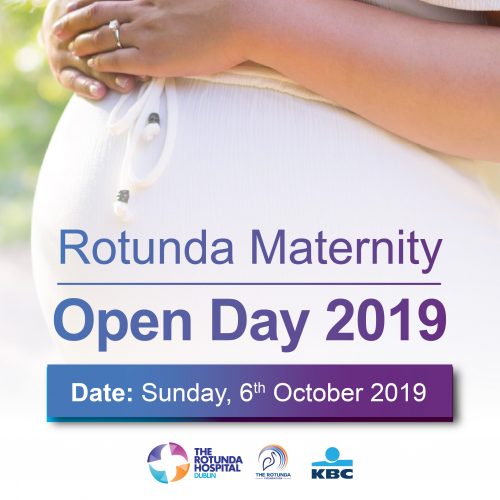
The Rotunda Hospital, with our partners The Rotunda Foundation and KBC Bank Ireland, are having our second Maternity Open Day on Sunday 6th October, from 10am to 2pm.
Tickets are free and available through Eventbrite. Register for Free Now
Throughout the day, visitors can get a behind the scenes look at some of our maternity services, with virtual tours of the various Departments at The Rotunda Hospital.
There will be numerous talks throughout the day and information sessions hosted by our expert staff for prospective parents and mums to-be.
There will be obstetricians and midwives, fertility specialists and sonographers, dietitians and physiotherapists available on the day.
Prospective parents and mums-to-be will be able to get information on the diverse range of services that makes the Rotunda Hospital the Maternity Hospital of Choice.
We will have staff on the day to talk to you about the Hospital’s clinics and services, and the team from the Rotunda Private will be on hand to provide you with information on private and semi-private options. You can ask the community midwifery team about
services close to your home, and find out the benefits of breastfeeding from our Lactation Team.
Schedule 
10:15am: Male and Female Infertility: Investigations, Diagnosis and Treatments at the Rotunda Hospital
10:30am: Planning for Pregnancy/Preconception Care
10:45am: Choices in Antenatal Care
11:00am: Non-invasive Prenatal Testing
11:15am: Importance of Parent Education Classes
11:30am: A Pre-Pregnancy Financial Guide
11:45am: Healthy Eating during Pregnancy
12:00pm: Exercise during Pregnancy
12:15pm: Emotional Health and Wellbeing
12:30pm: Benefits of Preparing for Childbirth – Yoga & Hypnobirthing
12:45pm: Preparing for Labour and Birth
1:15pm: Role of Birthing Partner during Pregnancy with particular Emphasis on Labour and Birth.
1:30pm: Breastfeeding
1:45pm: Tea, Coffee & Light Refreshments
Register for Free Now
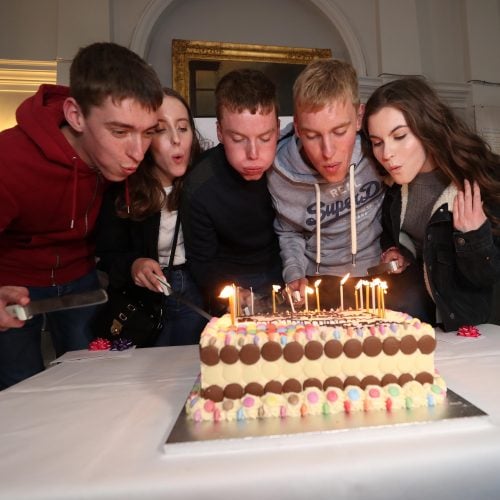
We were delighted to welcome back to The Rotunda Hospital, the ‘famous five’ Cassidy quintuplets, to celebrate their 18th Birthday.
The Cassidy quintuplets, from County Wexford, were born in the hospital on the 16th of August, 2001 at just over 25 week’s gestation. Conor, Cian, Rory, Amy and Dearbhail – and their parents Veronica and Kevin Cassidy returned to the Rotunda Hospital to celebrate the milestone birthday with the staff that spent several months caring for them in 2001.
Prof Fergal Malone, Master of The Rotunda, put the siblings births in a wider context;
“Multiple births have become increasingly common in the last 10 of years, with about three in every 1,000 pregnancies being a twin, triplet or higher order multiple gestation. There has been a 30% increase in the number of successful twin births in the last two decades, which is due to wider availability of assisted reproductive technologies (such as IVF) and older maternal ages at conception. However, the number of triplet, quadruplet and quintuplet births has halved, due to more effective controls on assisted reproductive technologies. With multiple births, there is a 95% survival rate for twins, 70% for triplets and 50% for quadruplets. It is clear however that quintuplets are very rare today, with the Cassidy quintuplets being the only set in Ireland, and the healthy survival rate of all five babies in a quintuplet pregnancy is quite exceptional.”
All in The Rotunda wish Conor, Cian, Rory, Amy and Dearbhail a very Happy Birthday and many happy returns!
- Ireland’s only quintuplets celebrate 18th birthday at the Rotunda Hospital. The Cassidy siblings, Conor (left) Amy, Cian, Rory and Derbhail (right) Ireland’s only quintuplets, returned to celebrate their milestone 18th birthday at the Rotunda Hospital with the staff that spent several months caring for them following their birth in 2001. The ‘famous five’ – Conor, Cian, Rory, Amy and Dearbhail – were born at just over 25 week’s gestation in the Neonatal Intensive Care Unit (NICU) and weighed between 1lb 6oz to 1lb 11oz at birth. Pic. Robbie Reynolds
- Ireland’s only quintuplets celebrate 18th birthday at the Rotunda Hospital. The Cassidy siblings, Conor, Amy, Cian, Rory and Derbhail, Ireland’s only quintuplets, pictured with the Master of the Rotunda Hospital, Professor Fergal Malone (left) and Professor Tom Matthews, Consultant Paediatrician and former Head of Neonatology at the Rotunda Hospital