In 2018 93% of all babies born in the Rotunda Hospital at a birth weight of greater than 700 grams (1.54lbs) survived-

The corrected perinatal mortality rate (PMR) is at an all-time low at 3 per 1,000 babies born, marking a 40% reduction from 2015, according to Rotunda Hospital figures-
–  The Rotunda Hospital launches the first NICU ‘End of Treatment Bell’ in Ireland-

To celebrate premature infants born at the Rotunda Hospital, Ireland’s busiest maternity hospital, the Rotunda Foundation welcomed back about 70 families to host a party in their honour.

All babies born in 2017 who weighed less than 1500 grams along with their parents and siblings came together on the 14th of November to celebrate World Prematurity Day, and to also welcome back the first group of babies to complete the “Beads of Courage” programme.

The event also marked the launch of the new ‘End of Treatment Bell’ which acknowledges babies on completion of treatment and is rung in celebration of their departure from the hospital. The neonatal intensive care unit (NICU) at the Rotunda Hospital is the first in Ireland to receive a treatment bell.  The Rotunda Hospital obtained the ‘End of Treatment Bell’ through charitable donations made through the Rotunda Foundation.

This year also marked another successful year of “Tentacles for Tinies”, a pilot project launched by the Rotunda Hospital in 2017.

The Rotunda Hospital also reported that the corrected PMR is at an all-time low at 3 per 1,000. This marks a 40% reduction from 4.8 per 1,000 babies that were born in 2015. New statistics from the report also indicate that 93% of all babies born in the Rotunda at a birth weight greater than 700 grams (1.54lbs) survived. This information is contained in the Rotund Hospital’s 2018 Annual Report, which was launched today.

Commenting on these positive results, Master of the Rotunda Hospital, Professor Fergal Malone said: “I am delighted to announce the results of our 2018 Annual Report on World Prematurity Day. A notable development for the Rotunda Hospital is the significant reduction in the corrected perinatal mortality rate, which has reduced by 40% since 2015. This is a very positive and reassuring figure. The multidisciplinary approach to antenatal care, advances in maternal-fetal medicine and neonatal pathways have contributed to this significant improvement.” World Prematurity Day is one of the most important days in the year to raise awareness of the challenges that families face as a result of preterm birth. Another significant finding in our annual report this year relates to the survival rate of premature babies born weighing more than 700 grams/ 1.54lbs, in that 93% of these babies at the Rotunda Hospital survived in 2018. While this survival is likely attributed to improvements in more than one specific area, the principle of the ‘golden hour’ post-delivery and the importance of timely interventions are recognised at the Rotunda Hospital. The quality of neonatal management in the first hour of life has important effects on not only the immediate health of the baby but also on its long term outcome.”

As the number of deliveries increases at the Rotunda Hospital, the report also showed that 99% of babies admitted to the neonatal unit survived to return home with their families. Admissions to the neonatal unit for the year were 1,116.  With 8,514 overall babies delivered in 2018, the Rotunda Hospital welcomed these findings as it is now officially named the busiest maternity hospital in Ireland, for its first year.  

Professor Malone concluded: “As well as marking World Prematurity Day, we are pleased to share our 2018 annual report findings today which reveals an overall stellar year for the Rotunda Hospital. In addition to positioning ourselves as the busiest maternity hospital in the country, we have also significantly improved our patient outcomes. Our financial performance was also superb effectively yielding a break-even budget, something which is highly unusual in the public health service.”


A team of researchers at the RCSI Department of Obstetrics and Gynaecology at the Rotunda Hospital, Dublin will today launch three research studies examining the experiences and impact of diabetes in women, ahead of World Diabetes Day 2019.

The three studies have been awarded total funding in the region of €1.1 million by the Health Research Board (HRB) and the European Commission.
The studies will look at the impact of diabetes in pregnant women and comprise a clinical trial, a research study, and a creative project.

The IRELAnD Trial will examine the role that aspirin plays in improving the health of pregnant women with diabetes. This is the first study to examine the impact of low-dose aspirin for the prevention of preeclampsia (high blood pressure during pregnancy) in women with diabetes. The trial will recruit over 550 women across seven maternity hospitals in Ireland over the course of the next three years.

Professor Fionnuala Breathnach, Consultant Obstetrician and Gynaecologist with RCSI and The Rotunda Hospital, said:
“Previous studies have shown that low-dose aspirin has an impact on reducing the risk of high blood pressure and other complications in some pregnancies. Through this study, we want to understand whether this benefit could be applied to pregnant women with diabetes. Preeclampsia is a high-risk complication that affects 2-3% pregnant women in Ireland each year, and rises to 5-7% in first time pregnancies, and can be particularly problematic when the woman has a long-standing history of diabetes. These pregnancies can be quite complicated, and any opportunity that we have to explore ways of reducing risk is an opportunity of a lifetime for this research team.”

The second study undertaken by RCSI is with BigMedilytics, an international collaboration between partners from academia and industry across Europe. It will assess whether self-monitoring of blood sugar levels, using glucometers connected to a mobile app, and then using App- assistance for management of gestational diabetes (GDM)by the woman and by the clinical team may reduce the number of required hospital visits for women.

Currently, patients with GDM need to attend specialised diabetic clinics where obstetricians, endocrinologists, and dieticians can review them. These visits often involve long waiting times and consume patient and hospital resources, while only providing a snapshot of diabetes control. Through the ‘GDMapp’ app, the patient has a much more straightforward way of documenting their blood sugar results and sharing them with their clinical team.

Dr Elizabeth Tully, Programme Manager of the HRB Mother and Baby Clinical Trial Network, said:
“Working with BigMedilytics, we hope to understand how self-monitoring solutions, like smart glucometers, can be used to reduce the amount of hospital appointments and expert management required for women with gestational diabetes. If this proves possible, the results of this study will have a positive impact on women, who may need to attend fewer specialised diabetes clinics and hospitals, which are already stretched well beyond capacity.”

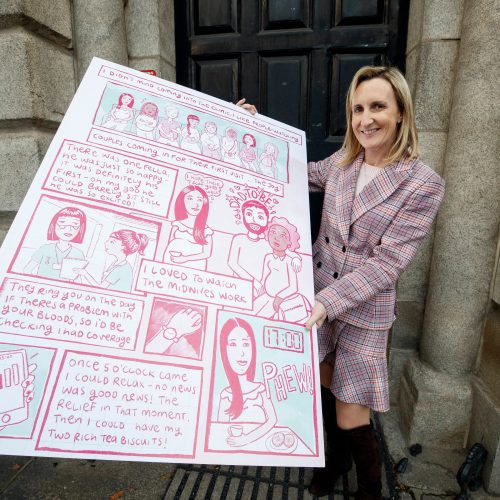
The third project aims to share the story of diabetes in pregnancy in Ireland. In an online comic, the study will follow the lives of women with diabetes during their pregnancies.

With insights drawn from interviews with real women and illustrated by artist Fiona Carey, The Breakfast Club comic shares the full scope of these women’s experiences with diabetes during pregnancy. From learning to manage a new diet to getting to grips with using insulin, the study will illustrate their hopes, frustrations, tragedies and joys. The comics will be available to view and download on breakfastclubcomic.ie

Fiona Carey, artist of The Breakfast Club, said: “Pregnancy is an exciting, overwhelming, and challenging time for expecting mothers. For pregnant women with diabetes, it can be even more difficult, even isolating. Through The Breakfast Club project, we hope to demystify the condition and to translate these women’s hopes, frustrations, tragedies, and joys into art in the hope that it will provide clarity and support to pregnant women with diabetes across Ireland and the world.”

Gestational diabetes develops in women during pregnancy because the mother’s body becomes resistant to the effects of insulin. Levels of sugar in the woman’s bloodstart to rise. High blood sugar levels in the mother’s body are passed through the placenta to the developing baby. This can cause significant health problems for the baby if left untreated.

Gestational diabetes usually begins in the second half of pregnancy and goes away after the baby is born.

Gestational diabetes affects 5-10% of Irish women.

Pre-gestational diabetes occurs when women have diabetes (type 1 or type 2) before becoming pregnant. Women with pre-existing diabetes are at a higher risk of developing pregnancy complications, from high blood pressure related complications, to poorly functioning placenta. Babies of diabetic pregnancies may have an increased risk of diabetes in later life.

Moreover, the incidence of pre-gestational (Type 1 and Type 2) diabetes is increasing. In 2014, 5.1% of women in Ireland had diabetes (The Lancet, 2016 https://www.thelancet.com/journals/lancet/article/PIIS0140-6736(16)00618-8/fulltext#seccestitle160).

The incidence of type 2 diabetes mellitus is increasing in younger people, with many women of childbearing age developing type 2 diabetes (HSE guidelines, 2010).

This is why an optimal management and care of diabetes before and during pregnancy is of great importance, for the mother, the baby, and the whole society.

The total number of people living with diabetes in Ireland is estimated to be 225,840 (diabetes Ireland)

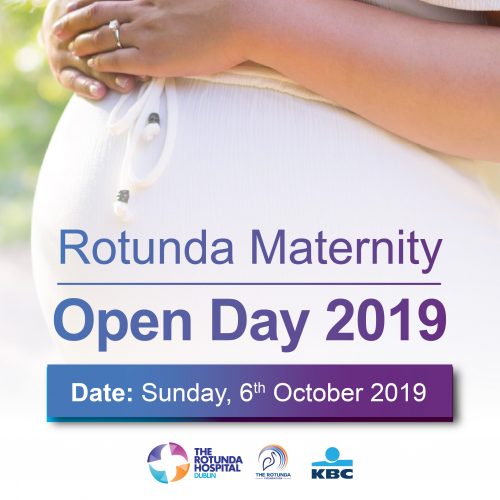
The Rotunda Hospital, with our partners The Rotunda Foundation and KBC Bank Ireland, are having our second Maternity Open Day on Sunday 6th October, from 10am to 2pm.

Tickets are free and available through Eventbrite.   Register for Free Now

Throughout the day, visitors can get a behind the scenes look at some of our maternity services, with virtual tours of the various Departments at The Rotunda Hospital.

There will be numerous talks throughout the day and information sessions hosted by our expert staff for prospective parents and mums to-be.

There will be obstetricians and midwives, fertility specialists and sonographers, dietitians and physiotherapists available on the day.

Prospective parents and mums-to-be will be able to get information on the diverse range of services that makes the Rotunda Hospital the Maternity Hospital of Choice.

We will have staff on the day to talk to you about the Hospital’s clinics and services, and the team from the Rotunda Private will be on hand to provide you with information on private and semi-private options. You can ask the community midwifery team about
services close to your home, and find out the benefits of breastfeeding from our Lactation Team.

Schedule

10:15am: Male and Female Infertility: Investigations, Diagnosis and Treatments at the Rotunda Hospital

10:30am: Planning for Pregnancy/Preconception Care

10:45am: Choices in Antenatal Care

11:00am: Non-invasive Prenatal Testing

11:15am: Importance of Parent Education Classes

11:30am: A Pre-Pregnancy Financial Guide

11:45am: Healthy Eating during Pregnancy

12:00pm: Exercise during Pregnancy

12:15pm: Emotional Health and Wellbeing

12:30pm: Benefits of Preparing for Childbirth – Yoga & Hypnobirthing

12:45pm: Preparing for Labour and Birth

1:15pm: Role of Birthing Partner during Pregnancy with particular Emphasis on Labour and Birth.

1:30pm: Breastfeeding

1:45pm: Tea, Coffee & Light Refreshments


Register for Free Now

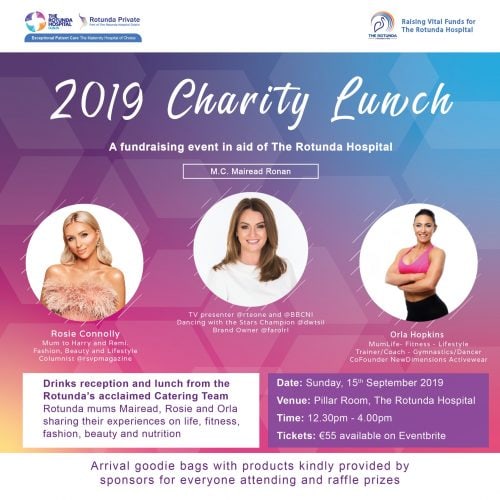
On Sunday 15th September, we and our charity partners The Rotunda Foundation invite you to the elegant surrounds of The Pillar Room, for our 2019 Charity Lunch. Joining us for the three course lunch & panel discussion are three Rotunda mums, Mairead Ronan, Rosie Connolly, and Orla Hopkins, who will share their experiences on life, fitness, fashion, beauty and nutrition.

Early bird tickets for the lunch are on sale now until the 25th August and will cost €45.

Full price tickets, available after that date, will be €55, with all proceeds going to The Rotunda Foundation, the official fundraising arm of the Rotunda Hospital.

The Rotunda Foundation relies upon the kindness and generosity of its supporters and friends to help fund essential Rotunda Research, provide additional life-saving equipment for the hospital’s specialist units and aid services that support our most vulnerable patients.

Find out more at rotunda.ie/fundraising-lunch

To celebrate premature infants born at Dublin’s Rotunda Hospital and to applaud their strength and tenacity, the Rotunda Foundation hosted a party in their honour on Thursday 15th November.  All babies born in 2016 who weighed less than 1500 grams along with their parents and siblings will join together to celebrate World Prematurity Day and also to mark a successful year of “Tentacles for Tinies”, a pilot project launched by the Rotunda Hospital last year.

The Rotunda Hospital also announced the hospital’s 2017 Annual Clinical Report, which shows that in 2017 the survival rate of normal babies born premature at 28 weeks or later was 100%.

Commenting on these superb outcome results, Master of the Rotunda Hospital, Professor Fergal Malone said “I am delighted to announce these results on World Prematurity Day, which is one of the most important days in the year to raise awareness of the challenges that families face as result of a preterm birth. One of the main risk factors for preterm birth is having delivered preterm in a prior pregnancy followed by medical complications such as blood pressure problems during pregnancy or poor fetal growth. The team at the Rotunda utilizes the latest cutting edge research to optimize the early diagnosis of preterm birth, preeclampsia and fetal growth restriction. Combined with significant improvements in integrated obstetric and neonatal care, this underpins these excellent outcome results for some of our most vulnerable babies. More families than ever now have healthy surviving babies because of continued advances in obstetric and neonatal care at the Rotunda.”

Coverage of World Prematurity Day and our celebrations

RTE Radio One Drivetime

Weekend AM

Some photos from the day!


To mark the centenary of the Midwives (Ireland) Act 1918 and the first sitting of the Central Midwives Board of Ireland on 1st October of that year, a conference will take place in the Pillar Room to discuss historical and contemporary perspectives in midwifery in 2018.

Register on Eventbrite

Conference Programme

8.30 Registration

9.00 Welcome: Professor Fergal Malone, Master of the Rotunda Hospital

Opening address: Fiona Hanrahan, Director of Midwifery and Nursing, Rotunda Hospital

The conference will be opened by Simon Harris, T.D., Minister for Health

9.45 Pre twentieth century maternity. Chair: Catherine Cox, Director, Centre for the History of Medicine in Ireland, University College Dublin

Changing childbirth in eighteenth century Ireland. – Mike Geary, Rotunda Hospital

“A fat pompous old woman, ignorant, and illiterate”: popular midwifery in nineteenth century Ireland. – Laurence Geary, University College Cork

Breastfeeding in nineteenth-century Irish workhouses. Judy Bolger, Trinity College Dublin

11.05 Tea & Coffee

11.20 Motherhood supported. Chair: Anne O’ Byrne, Head Librarian, Rotunda Hospital.

Women’s views and experiences of having their mental health needs considered in the perinatal period. – Ursula Nagle, Rotunda Hospital

The prevalence of anxiety in pregnancy and at three months postpartum, as reported by nulliparous women in Ireland. Louise Rafferty, Rotunda Foundation

“Treasure Hunting” – establishing a midwife-led foetal growth assessment clinic to identify the high-risk foetus in the low-risk pregnancy. – Heather Watson, Belfast HSC Trust

Getting ready for baby – group-based antenatal care and education. – Denise Boulter, Public Health Agency, Belfast

12.55 Lunch

13.40 The newly registered midwife and maternal care. Chair: Harriet Wheelock, Keeper of Collections, Heritage Centre, Royal College of Physicians of Ireland

Municipal gospel or necessity? Belfast Corporation and the regulation of midwives, 1911-1918. – Philomena Gorey, University College Dublin

The first Central Midwives Board of Ireland (1918-1923): impact and change. – Ann Louise Mulhall, Coombe Women and Infants University Hospital

Delivering the district. Nurse Anne Lynch, Midwife to Oldcastle, Co. Meath, in the first decades of the new Irish State. – Anne MacLellan, James Connolly Memorial Hospital, Anne Marie Meenan, Coombe Women and Infants University Hospital

Midwives and antenatal care: the boundaries of responsibility. – Janet Greenlees, Glasgow Caledonian University

15.15 Tea and Coffee

15.30 Maternal health, social policy and birth control. Chair: Dawn Johnston, Director of Midwifery, Nursing and Midwifery Board of Ireland

Midwives voices in Irish maternity care policy documents: the Mother and Infant Scheme. – Margaret Dunlea, Trinity College, Dublin

Family planning in the Rotunda Hospital, c.1961-1972. – Deirdre Foley, Dublin City University

Recruiting, training and supervising Maternity Peer Supporters to enhance perinatal care of migrant women within a multisite feasibility study. – Catherine Burke, The ORAMMA project, Sheffield Hallam University

Midwives voices in Irish maternity care: contemporary developments. – Malgorzata Stach, Trinity College, Dublin

17.00 Conference closing.

A fundraiser luncheon, held in Cliff Townhouse on 8th June, raised money for a new research initiative, ‘SoundStart’, from the Royal College of Surgeons in Ireland Department of Obstetrics and Gynaecology, based in the Rotunda Hospital.

‘SoundStart’ is an obstetric ultrasound research and training programme aimed at building on the world-class work that is being carried out in the field of ultrasound research, in parallel with offering training opportunities to sonographers from all over Ireland.

Ultrasound has become the cornerstone of fetal medicine. For sick or at-risk babies, the pathway from fetal life to birth can be unpredictable. The ‘Sound Start’ Programme aims to explore this fascinating transition, in order to improve outcomes for mothers and babies.

Ultrasound is a technology that uses high frequency sound waves to create images, and it is safe to use in pregnancy, because no radiation is involved. With advancing technology, there is a wealth of information that can be gathered about fetal health.

Ultrasound helps answer major fetal health questions, like: Is this baby expected to need attention from neonatologists after birth, and if so, where and when should this baby be born? What is the best way for this baby to be delivered, that minimises risk for mother and for baby?

A critically important aspect of the Sound Start programme is to improve the provision of quality prenatal ultrasound services at a national level.

Prof. Fionnuala Breathnach, the pioneer behind SoundStart, says;

“Working at the Rotunda Hospital, we are continually reminded of the absence of fetal anatomy scan services in many maternity units around the country. We consider it to be a fundamental component of pregnancy care that all women are offered the opportunity to obtain a detailed scan that can detect fetal problems that will critically determine the health of that baby at birth. It remains a glaring disparity in women’s health in Ireland today that such a service in many parts of the country is only available to informed women with the means to pay for an anatomy scan.”

The ‘SoundStart’ programme hopes to provide training opportunities for sonographers, through providing access to up-to-date ultrasound equipment and learning tools in a manner that will facilitate the development of regional scanning services. The money raised through fundraising through the Rotunda Foundation will be used to equip a dedicated research ultrasound suite. This suite will allow doctors, sonographers and midwives to attend training in high-end fetal ultrasound examination.

The Rotunda Hospital and The Rotunda Foundation celebrated World Prematurity Day on Friday 17th of November.

Did you know, 1 in 10 babies are born prematurely? World Prematurity Day raises awareness of the challenges that premature babies and their parents go through all across the globe.

In honour of the day, the Rotunda Hospital, with the Rotunda Foundation and the Rotunda Knitters hosted a series of events to celebrate the strength and tenacity of the ‘premies’ and their parents that come through our doors.

From midnight on 17th November, as the hospital lit up in bright purple, (the colours of World Prematurity Day), the Rotunda Knitters donated gorgeous knitted gift packs to babies born in the hospital throughout the day. 


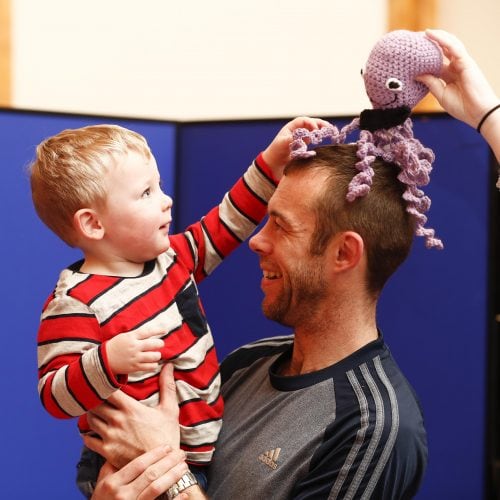
We launched our ‘Tentacles for Tinies’ initiative, which gives a crocheted octopus to babies in the NICU. The octopus tentacles replicate the umbilical cord and can comfort premature babies while they recuperate in the NICU.

You can read more about Tentacles for Tinies here.

Judy Mullane, who writes the BabyAmyAzing blog about her experiences with her Rotunda premie Amy, ran the Dublin Marathon in aid of the Rotunda NICU and raised €5000. She presented the money to Sheila Costigan, Director of the Rotunda Foundation, and Prof Afif El-Khuffash, Consultant Neonatologist, on this very important day.

To round off World Prematurity Day here in the Hospital, we invited some of our ‘NICU graduates’ from 2015 to join us in The Pillar Room, along with their mums and dads and other family members, to meet the doctors and nurses who helped them right after they were born. We showcased some of the neonatal research that the Hospital is undertaking to help provide better care and outcomes for premature babies and displayed some of the initiatives and supports we have in place for premies and their parents, like our ‘Beads of Courage’ initiative, and the Aidan and Donnachas Wings project, and our mobile intensive care unit for transporting sick infants to receive tertiary care.

The Rotunda Hospital invited our GP colleagues to an educational study evening on the 18th of October, to build stronger relationships with our colleagues in general practice, and other allied health professionals.

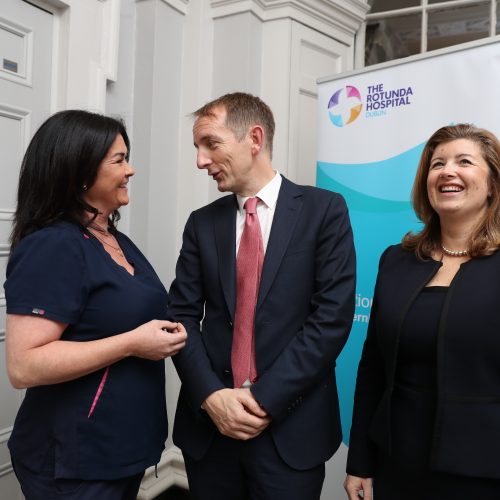
Prof Fergal Malone, Master of the Rotunda, opened our GP study evening and spoke about what an exciting time it is for the Hospital, with many changes on the horizon, including our move to the grounds of Connolly Hospital and the new Maternal and Newborn CMS electronic health records, due to come online in November.

Prof Malone also mentioned our new GP E-zine that will keep GPs informed of services and innovations in the Hospital.

You can read the first issue here, and sign up to receive the next issues straight into your inbox here.

Dr Karen Flood was the first speaker, and explored the topic of prenatal testing in the Hospital & the advances that have been made in non-invasive methods of prenatal testing in the last few years.

Then, Advanced Midwife Practitioner Bernadette Gregg spoke about the referral pathways in the Hospital for patients attending the Emergency & Assessment Unit.

Dr Naomi Burke rounded off the evening, speaking about triage & pathways for gynaecological emergencies here in the Hospital.

We want to thank all who attended.

You can see some photos from the evening below.